Underground Railroad Underground Railroad Underground Railroad Underground Railroad Underground Railroad Underground Railroad Underground Railroad
|
COOLING SPRINGS FARM
On the Underground Railroad Near Adamstown, Maryland
|
||||||||||
|
|
||||||||||
|
Learn more about the Underground Railroad . . .
|
||||||||||
|
||||||||||||||||||||||||
|
||||||||||||||||||||||||
> Visit the most comprehensive map of Underground Railroad Sites
|
||||||||||||||||||||||||
> To book on Cooling
Springs Farm |
||||||||
|
|
|
|
||||||||
COOLING SPRINGS FARM
|
ToursTours of Cooling Springs Farm and its Underground Railroad safe-house are arranged by appointment or through the organizations listed under the programs section of this website. To arrange a tour directly, contact Cooling Springs Farm.
Driving DirectionsIf you are arriving by airplane or train, see directions following the driving directions From Washington, DC, and EastTake Interstate 270 north to Frederick, then very briefly onto Interstate 70 west, then US15 south. You will now be on US15 and US340 combined. Where they diverge, take US15 to your left. After about two miles, turn left onto Mountville Road, then right on Ballenger Creek Pike to Cooling Springs Farm at 2455 Ballenger Creek Pike. From Baltimore and EastTake Interstate 70 west to Frederick, then US15 south. You will now be on US15 and US340 combined. Where they diverge, take US15 to your left. After about two miles, turn left onto Mountville Road, then right on Ballenger Creek Pike to Cooling Springs Farm at 2455 Ballenger Creek Pike. From Pennsylvania and NorthTake US15 south through Frederick, Maryland. After passing through Frederick, you will be on US15 and US340 combined. Where they diverge, take US15 to your left. After about two miles, turn left onto Mountville Road, then right on Ballenger Creek Pike to Cooling Springs Farm at 2455 Ballenger Creek Pike. From Virginia and SouthFind your way to US Route 15 north which lies to the west of Interstate 95 and to the east of Interstate 81. Take US15 north across the Potomac River. Immediately after crossing the river, turn right onto Maryland Route 28, and then take an immediate left onto Ballenger Creek Pike to Cooling Springs Farm at 2455 Ballenger Creek Pike. From West Virginia and WestTake US340 north across the Potomac River. Where US340 meets US15, follow the signs to US15 south which involves a U-turn at Mount Zion Road. You are now going south of US340 and US15 combined. Where they diverge, take US15 to your left. After about two miles, turn left onto Mountville Road, then right on Ballenger Creek Pike to Cooling Springs Farm at 2455 Ballenger Creek Pike.
Or, take Interstate 70 from the west to US15 south at Frederick. At first, you will be on US15 and US340 combined. Where they diverge, take US15 to your left. After about two miles, turn left onto Mountville Road, then right on Ballenger Creek Pike to Cooling Springs Farm at 2455 Ballenger Creek Pike. Arriving by AirThe easiest of the three major local airports for travelers arriving by air is Thurgood Marshall International Airport (BWI) in Baltimore. Other choices are National Airport (DCA) in Washington DC or Dulles International Airport (IAD) near Washington, DC. For driving directions from Marshall Airport, see under Baltimore above. From Dulles Airport, take Virginia Route 267 west to US15 north and follow the directions above for ³From Virginia and the South.² Dulles Airport is about 15 minutes closer to Cooling Springs Farm but flights into Baltimore are usually less expensive than to Dulles. Departures are also much easier at Marshall than from Dulles. Arriving by TrainThere is commuter train service several times daily from Union Station in Washington DC to Point of Rocks which is three miles from Cooling Springs Farm. If you do not have transportation after reaching Point of Rocks, you may call for a taxi at Bowie Transportation at 301.695.0333.
|
COOLING SPRINGS FARM |
The History of Cooling Springs Farm and the
|
COOLING SPRINGS FARM |
Photos of the Potomac-to-Doubs Route of the Underground Railroad, Cooling Springs Farm and Nearby Underground Railroad Landmarks
|
|
|
|
One stretch of the Potomac-to-Doubs Route of the Underground Railroad running three miles from the Potomac River to Doubs, Maryland. This photograph is of Thomas's Lane just north of the Potomac River. This is what freedom seekers saw in their first few minutes in Union territory. Thomas's Lane has existed since the early 1800s when the farm through which it runs was purchased by the Thomas family, in-laws and neighbors of the Michaels.
|
|
|
|
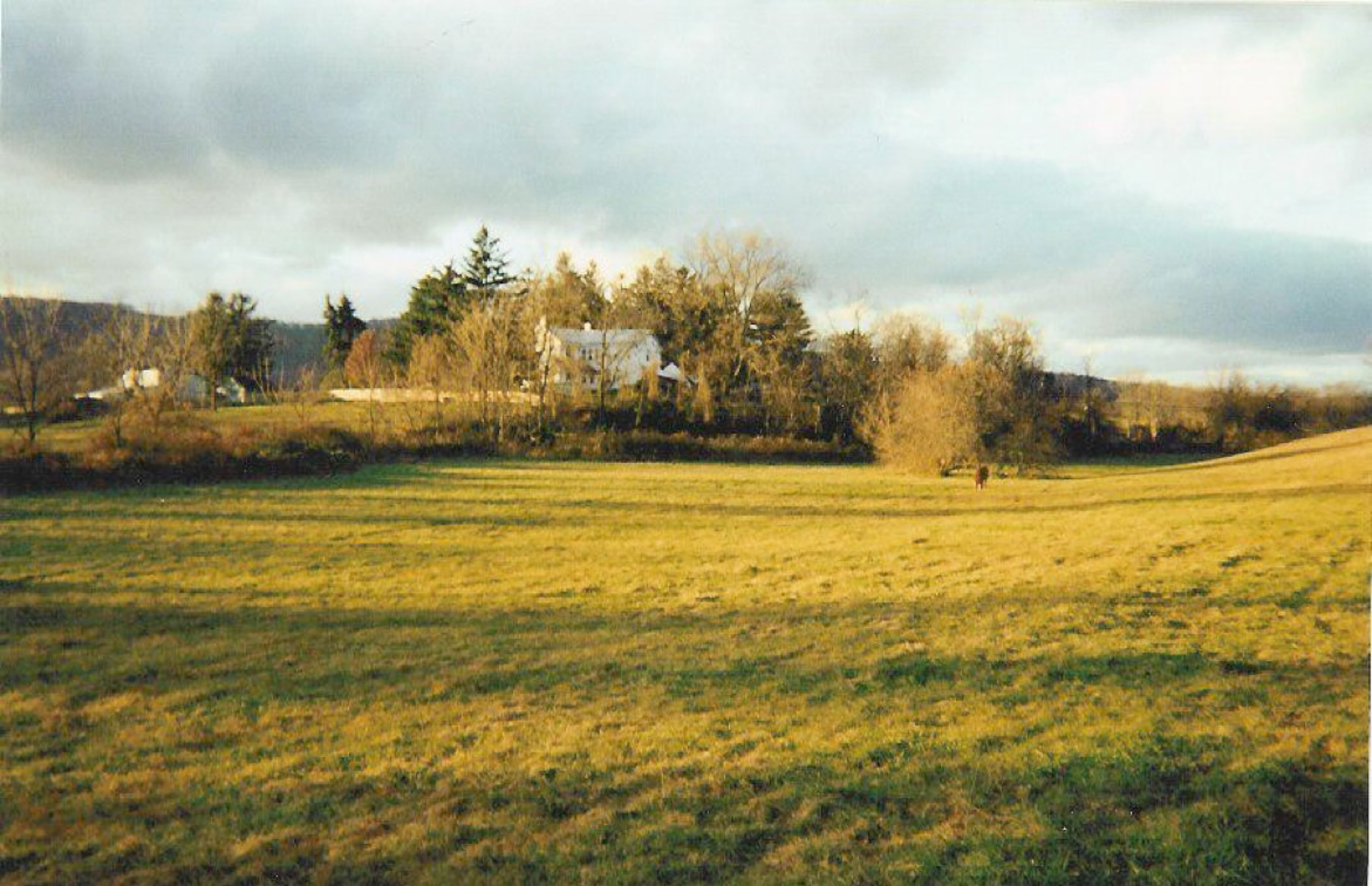
Further north on the Potomac-to-Doubs Route of the Underground Railroad, here overlooking Cooling Springs Farm and the Michael homestead in the background. The three–mile route of the Potomac-to-Doubs Route of the Underground Railroad consists of a network of old farm roads and lies intact in the same place as in Underground Railroad days. It is a rarity today that this length of an old Underground Railroad route remains whole and undisturbed by development,
|
|
|
|
What freedom seekers saw: the Spring House, hidden beyond the bridge past the creeks of Cooling Springs Farm. Frank and Emily Wanzer, Barnaby and Mary Elizabeth Grigby, and two unknown others are thought to have passed through Cooling Springs Farm on Christmas Eve, 1855, and might have been sheltered in the Spring House after the six had escaped that morning from Oak Hill Plantation near Leesburg, Virginia, 15 miles south of Cooling Springs where they had been enslaved. The next day, Christmas, while the party of six was traveling north from Cooling Springs to Pennsylvania, one of the unknown freedom seekers was shot and killed by slave catchers, the other captured and re-enslaved. The Wanzers and Grigbys escaped at gunpoint, went on north, and lived the rest of their lives in Canada. Cooling Springs Farm has located the descendants of Frank Wanzer and they and the Michael family have shared their common history.
|
|
|
|
On the left is Allen Nelson, great-great-grandson of freedom seeker Frank Wanzer who is thought to have passed through Cooling Springs Farm in 1855, and on the right, Peter Michael, great-great-grandson of Ezra and Margaret Michael said to have operated Cooling Springs Farm as an Underground Railroad safe-house at the time. Between them is Januwa Moja, wife of Mr. Nelson, and behind the three is the Spring House where Frank Wanzer and his five fellow freedom seekers were likely sheltered. The spring house is shown here before restoration.
|
|
|
|
The first public tour of Cooling Springs Farm and spring house conducted in August, 2002. Shown here are several members of the Michael family and of the Ambush and Harris families, long-time neighbors of the old African-American village of Pleasant View adjoining the Michael farms. The three families have known each other for at least six generations. The spring house is shown in the background before restoration.
|
|
|
|
Rhonda and Sparky Rucker, left above, lead celebrants in Underground Railroad songs at the rededication of Cooling Springs Farm on July 2, 2003. The Ruckers are the national leaders in rediscovering and keeping the songs of the Underground Railroad before the audiences of today. On the right is Walt Michael.
|
|
|
|
On the right in this circa 1900 photograph is the home of Ezra and Margaret Michael from which existed in Underground Railroad times. This original Cooling Springs home, begun in 1768 by the first generation of the family, lasted until about the 1920s. The "new" Cooling Springs home, still so called, built by Ezra and Margaret in 1879, is in the top center of the photograph, and is the farm residence today.
|
|
|
|
The present Cooling Springs home built by Ezra and Margaret Michael in 1879. This home is typical of the local vernacular farmhouse architecture of the mid- to late nineteenth century, and retains its original layout, floors, walls, ceilings, three chimneys, stone masonry and most fixtures. Cooling Springs Farm is a Frederick County Landmark, the home is listed by the Maryland Historical Trust in the Maryland Inventory of Historic Properties, and the home has been featured on the Historic Home Tour of Frederick County.
|
|
|
|
St. Paul's Episcopal Church near Cooling Springs Farm. The church was supported in its founding as an integrated parish by Ezra and Margaret Michael, their Thomas and Virts in-laws, and others in 1842, the year after Margaret and Ezra were married. The church and its graveyard were integrated from the beginning and still are. St. Paul's was active in the abolitionist movement and possibly in the Underground Railroad, and was used as a hospital by the Union Army during the Civil War.
|
|
|
|
Ezra (1813-1886) and Margaret (1823-1897) Michael. She was born on his tenth birthday. |
COOLING SPRINGS FARM |
Peter Michael Available to Speak on the Underground Railroad
Cooling Springs owner Peter H. Michael is available to conventions, meetings and civic groups, and to television and radio to speak on the Underground Railroad. He has given many interviews and presentations in each of these media. There is no charge.
Mr. Michael is the author of An American Family of the Underground Railroad on Michael family Underground Railroad involvement, and Guide to Freedom: Rediscovering the Underground Railroad In One United States County. You may visit the first book's web site or order the book here and the second book's web site or order it here.
His latest book, Guide to Freedom: Rediscovering the Underground Railroad In One United States County, reveals the Underground Railroad in Frederick County, Maryland, where he lives, and nearby. The book is available at Amazon and may be ordered wherever books are sold.
Peter Michael is also the author of Out of This World, an exposι of the failure of the United Nations to adequately assist poor countries in lowering their birth rates. To purchase the book, click here.
Peter Michael is the founder and publisher of Underground Railroad Free Press, North AmericaΉs leading Underground Railroad news publication and the international central registry f Underground Railroad organizations. To subscribe to this free publication, order back issues, or submit articles, letters or advertising, visit the Underground Railroad Free Press web site here.
Mr. Michael is a co-founder and officer of Friends of the Underground Railroad, Inc., an international organization which seeks to identify and preserve remaining Underground Railroad sites, promote interest in the Underground Railroad, and advocate for education on the Underground Railroad. You are encouraged to visit the web site of Friends of the Underground Railroad here.
In his professional life, Peter Michael is founder and president of Michael Strategic Analysis, an award-winning firm located in Adamstown, Maryland, practicing strategic planning, market analysis and economic damages testimony. Visit the MSA web site here. Mr. Michael took his undergraduate degree at the University of Maryland, holds an MBA in international business from the University of California at Berkeley where his master's thesis became the cover story of a national magazine, and completed a post-graduate fellowship in demography at Princeton University's Woodrow Wilson School of Public and International Affairs. He has taught management or demography at the graduate level at universities in Thailand, Japan, Costa Rica and the United States.
To schedule Mr. Michael for a presentation, click here. |
COOLING SPRINGS FARM
|
|
Contact Cooling Springs Farm
301 | 874 | 0235
E-mail Cooling Springs Farm here. |
COOLING SPRINGS FARM
|
Research on the Underground Railroad and Cooling Springs FarmThe Underground Railroad is an especially difficult topic to research since it was an illegal and clandestine operation for all of its 280-year existence. After the Civil War, some freedom seekers and a very few Underground Railroad conductors and safe-house operators wrote down their stories, but the vast majority did not. Even after the Civil War and the enactment of the Thirteenth and Fourteenth Amendments, conductors and safe-house operators could be prosecuted for having broken the law as it was written when they aided freedom seekers, and therefore many of those who provided aid took their Underground Railroad involvement as secrets to the grave.
In other cases, families were split over the issue of slavery, and sibling did not dare tell sibling of involvement in the Underground Railroad. This is true of the Michael family: Daniel and Samuel Michael, the two pro-slavery brothers of Ezra and Henry Michael, very likely did not know of their brothers' roles in sheltering freedom seekers, especially after Daniel and Samuel were removed from the will of their father for their pro-slavery stance.
Only about three percent of claimed Underground Railroad sites in the United States have documentary evidence of involvement with the other 97 percent known from oral tradition and occasional corroboration. The most likely source of information on the dwindling number of known Underground Railroad safe-houses and routes today is more than ever the oral traditions passed down in the families of freedom seekers, conductors and safe-house operators, and from property owner to property owner. For example, the chance intersection of the present-day oral traditions of two families is how the Michael family, descendants of safe-house operators, became aware of the Wanzer family, descendants of freedom seekers who were likely sheltered at Cooling Springs in 1855. However, very few of these oral traditions have been published, and fewer still will show up in internet or bibliographic searches. For the researcher interested in particular Underground Railroad sites or areas, the best approach, though it is time consuming, is to start asking the old families in the geographic area of interest, particularly African-American families.
Researching the Underground Railroad For internet and bibliographic resources on the Underground Railroad in general, please click on this link.
Researching the Underground Railroad in Frederick County, Maryland For internet, bibliographic and oral tradition resources on the Underground Railroad in Frederick County, Maryland, please click on this link.
Researching Cooling Springs Farm and the Michael family For resources on the involvement of Cooling Springs Farm and the Michael family in the Underground Railroad, please click on this link, or contact us. |
COOLING SPRINGS FARMSources on the Underground Railroad in General, the Underground Railroad
in
|
COOLING SPRINGS FARM
|
||||
An American Family of the Underground Railroad, by Peter Michael
|
||||
|
|
Now rare nearly 150 years after the end of the uplifting national phenomenon known as the Underground Railroad are the very few intact family accounts of Underground Railroad safe-house operators. This book tells the story of the extensively documented experiences of the family of author Peter Michael in sheltering Underground Railroad freedom seekers, and the reconnection after 150 years with the descendants of a freedom seeker who likely passed through the Underground Railroad safe-house at the author's Cooling Springs Farm, now an Underground Railroad historic site open to the public.
|
|||
|
To read more about An
American Family of the Underground Railroad and/or
to purchase the book, go to its web site here.
|
||||
Guide to Freedom: Rediscovering the Underground Railroad In One United
States County,
|
|
|
|
Only in the last few years have a few places around the country begun to research and catalogue their Underground Railroad sites to rediscover what the Underground Railroad looked like geographically. While upstate New York, eastern Kansas and the Philadelphia area have made good strides in this important rediscovery, very little has been done in border or southern states where research is much more difficult. Peter Michael's Guide to Freedom newly identifies 61 safe-houses and routes in Maryland's Frederick County with its key routes linking Virginia and Pennsylvania. Breaking more new ground, Guide to Freedom is believed to be the first Underground Railroad book to rate sites according to their likelihood of authenticity.
|
|
To read more about Guide
to Freedom and/or to purchase the book,
go to its web site here.
|
|
|
|
|